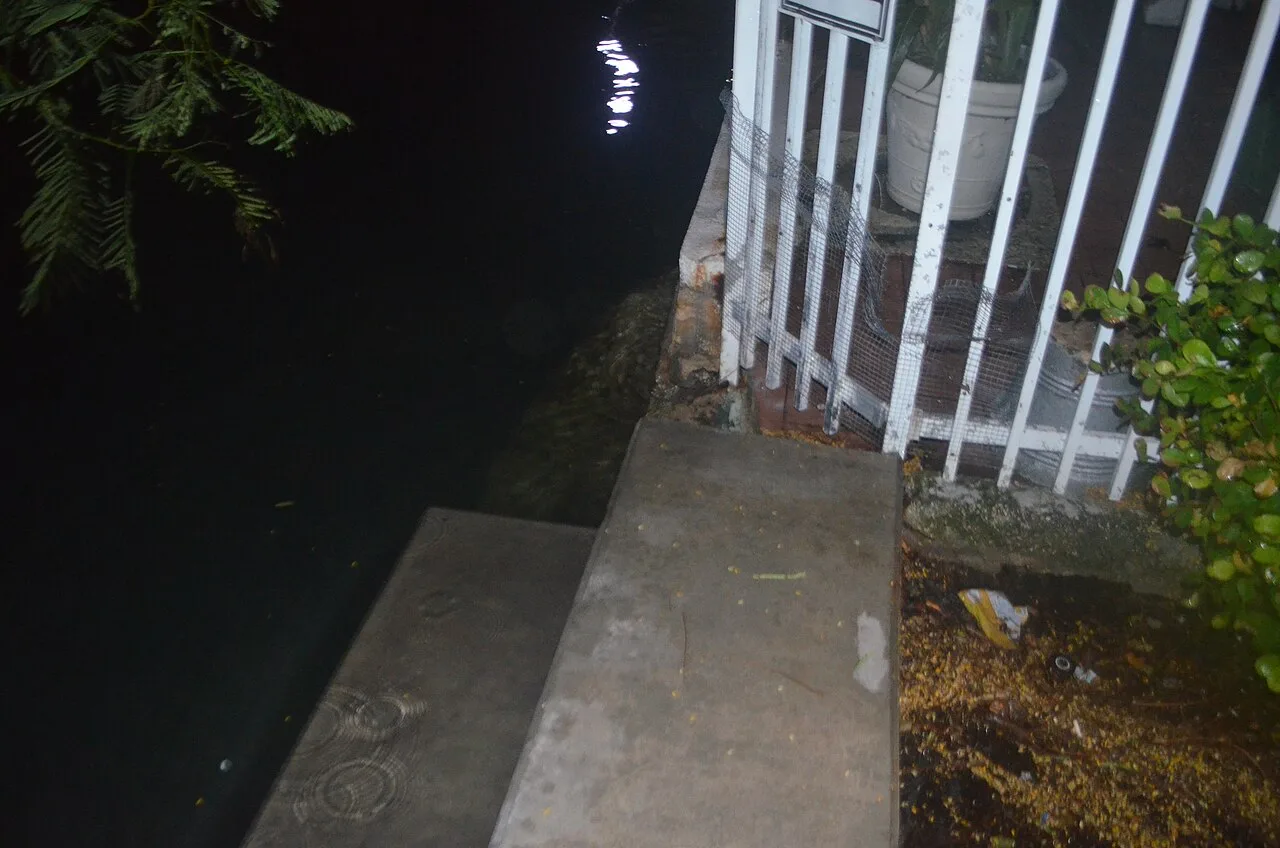
Miami Beach property owners can now apply for up to $20,000 toward raising or repairing a private seawall. About 50 of the city's 55 miles are privately owned.
Miami Beach is offering grants of up to $20,000 to property owners who raise or repair a private seawall. Applications opened this week and will be taken until the money runs out.
The grants come through the city’s Fight the Flood Private Property Adaptation program, the city said in a press release on Tuesday, Oct. 6. This round is for seawall projects only.
Most of the city’s seawalls are private
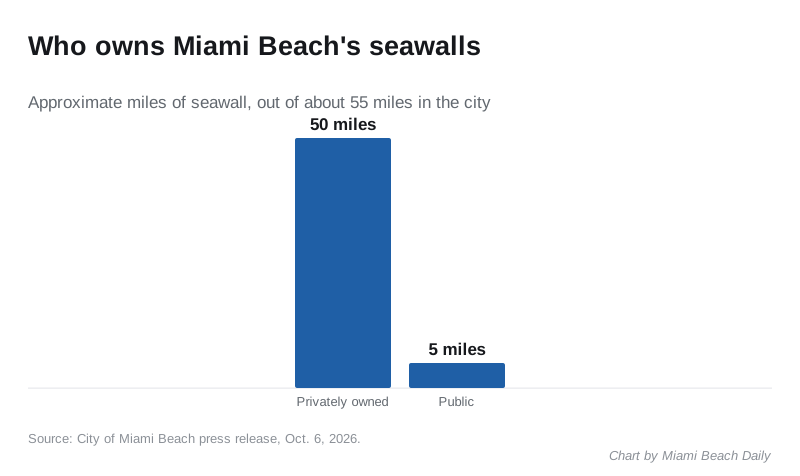
Miami Beach has about 55 miles of seawall, and all but about 5 miles are privately held, according to the city. That leaves most of the work of holding back Biscayne Bay to homeowners, condo associations and businesses.
The city said properties on the west side of the island, along Biscayne Bay, are the most exposed to flooding. The east side is largely protected by the dune and beach system along 7 miles of Atlantic coastline. The city also said 93% of its buildings sit in the FEMA Special Flood Hazard Area.
“Last week’s king tides were one of the highest recorded at the National Oceanic Atmospheric Administration Virginia Key tidal gauge, outside of a named storm,” Commissioner Laura Dominguez said in the release. She called raising seawalls “an important risk reduction strategy” in the city’s Sea Level Rise Adaptation Plan.
“With approximately 50 of the city’s 55 miles of seawalls privately owned, strengthening our shoreline requires a shared effort,” Mayor Steven Meiner said.
How the money works
The program’s own page sets out the terms:
- The grant covers up to $20,000 in total. That includes a property flood risk assessment valued at $2,500.
- For design and construction, the city reimburses half the cost, up to $17,500.
- Owners who qualify as low-to-moderate income do not have to match it. The city can pay the whole project, up to $20,000.
- Money is paid as a reimbursement after the work is finished.
- Applications are reviewed in the order they arrive. Applying does not guarantee funding.
The grant does not pay for docks, decking, dock foundation piles, pile wraps or any work not directly tied to the seawall, the city said.
Who can apply
According to the program page:
- The property must be in Miami Beach and be residential (single-family or multifamily) or commercial.
- The applicant must own it, or have the ownership’s commitment. Condo buildings need a signed resolution from the association.
- The property needs flood insurance and an elevation certificate.
- It must be in good standing with the city, with no pending city fees, fines or liens, and no litigation with the city.
- Buildings built to at least 1 foot above base flood elevation are not eligible, and neither is a standalone parking lot.
Low-to-moderate income applicants must also send income documents, such as three months of bank statements or pay stubs, or a benefit letter.
All other project types in the program, such as raising a home or flood-proofing, stay closed to new applications until early spring 2027, the program page says.
What it means for you
If you own a bayfront or canal-front property with an aging or low seawall, this is the city’s offer to pay part of the bill, and possibly all of it. Because applications are handled first come, first served, owners who already have an elevation certificate and flood insurance in hand are best placed to move fast.
Apply through the program page, which links to the city’s online application. Questions go to the Environment and Sustainability Department at MBRisingAbove@miamibeachfl.gov or 305-673-7084. Help is available in Spanish.
Any seawall work will also need city permits; our building permits and zoning guide explains where to start. For storm season planning, see our hurricane prep page.
Have your say